Tuesday, January 20, 2026

Day 12: Cold Day and Warm Memories

 Salam,


As we embarked on one of our final days in Türkiye we were greeted on the early morning walk with a beautiful snowy scene. Congenial Turkish men met us by trying to paint a warm lasting impression of Türkiye. Our first stop today was St. Anthony’s Church, it was built in 1724, as the Franciscan monks were pushed out of their initial residence of Galata (a nearby neighborhood of Istanbul). 


Although the church was empty inside there was a considerable viewing area that allowed us to see multiple parts of the church contrary to some of the Mosques we have visited that do not allow visitors to wander around as much. There could be many reasons for this, but I presume it to be a different approach to inviting potential converts. More room to walk around leads to a more welcoming atmosphere encouraging people to inquire about the space or even the religion. One thing I found particularly is that along the vistor section walls there were eight glass cases with small tokens or rosaries inside. A few us speculated as to what they could be, some ideas were relics or even religious items you can borrow while at the church. After inquiring they turned out to be handmade gifts by the people dedicated to the divinty of each box. I found this especially interesting because it shows an increased devotion or belief in a nonhuman figure since they are esentially giving physical items as tribute or in gratitude. 


Next, we visited a Sufi lodge. Sufism is a sect or branch of Islam, but others and many of the religion see it as its own religion. Unfortunately, the lodge was closed so we were not able to look inside, but within the gates there is a lodge, where the religious figures live, a school, cemetery and a garden. Below pictured is the inscription of the entrance gate:


Then, we proceeded down the street to visit the famous Galata Tower. First constructed in 1343 as a watch tower for the Byzantine Empire. Then in 1453, when the Ottoman Empire conquered the city, it was turned into a jail, next a restaurant, and now a museum. 


The center of the tower is a museum while the top is a viewing area. From the top we can look over the Golden Horn and see sights that we previously visited, such as the Hogia Sofia, Blue Mosque, Topkapi Palace, and the Suleymaniye Mosque. 


Hogia Sofia is pictured on the left while the Blue Mosque can be seen on the distant right.

Snowy Istanbul with a centered Turkish Flag. 

Snowy Istanbul with the Golden Horn centered. 

Nolan pondering the spectacular view of Istanbul across the Golden Horn.

Priyal and Daniela investigating a sky view map of European Istanbul. 

Priyal walking down the small staircase of Galata Tower. 


The last official stop of the day was the Galata Synagogue, a regional famous Jewish place of worship, notable for many terrorist attacks and a beforehand boarding school for young Jewish men. After getting through the tight security, administered by the Jewish version of the CIA, we were able to take a special look inside the famous synagogue and take in the modest but highly regarded decor. 


One fun fact we all learned through the exploration of the synagogue was that due to the long-ago bombings, there happen to be hard hats strapped underneath every seat. An unusual precaution necessary due to the synagogue’s tumultuous history. Our reading for the day brought to light this commonly known conflict but also surfaced the idea that Jews do not traditionally clash with Muslims: “Jews in Turkey publicly celebrate a long history of coexistence and tolerance in the region, yet live with ongoing security concerns bred by anti-Semitism and periodic attacks against members of the community and their institutions” (Brink-Danan, 2022, Introduction). Also inside the building was a Jewish history museum where we were able to view old documents from the previously inhabited boarding school, old Torah scrolls, and traditional Jewish belongings. The museum was centered around the Jewish exodus from Spain and refuge in Turkey where they formed a Judeo-Espanyol language that today sounds very similar to Spanish. 


Ancient Torah with pointer stick.
Diploma from boarding school.

Handcrafted Wooden Menorah

Jewish Calendar. 


Top balcony picture of the Galata Synagogue.

Even though this was the end of the planned day, Professor Huber recommended a nearby spice bazaar, which the entire group minus a few, jumped at the chance to explore. To get to the bazaar, we had to cross the Galata bridge, a two-level bridge with restaurants on the bottom and wide sidewalks on top that spans the Golden Horn. Pictured below you can see Kendall imitate the famous picture of poet James Baldwin on the Galata Bridge:


The spice bazaar was slightly overwhelming with hundreds and maybe a thousand people confined within a couple of small hallways. Although not my favorite experience, I can speak for all of us when I say we all have stories of trekking through and out of the bazaar. Especially after leaving the bazaar, it happened to be snowing quite hard with the wind shifting frequently making it difficult to see and imitating freezing conditions. It took most of us roughly an hour to make it back to the hotel, a mere 1.5 miles away due to the horrid conditions we endured. Ultimately, as we wind the trip down to a close, we again come away with fun and amusing stories that we will tell friends and family upon our return and for years to come! 


Until next time.


Güle güle


Morning walk to St. Anthony’s Church. 

Entrance to Spice Bazaar
Spice Bazaar
Galata Bridge view of Galata Tower in snowy windy weather. 
Atatürk statute in Taksim Square. 


Yet more Prof pics

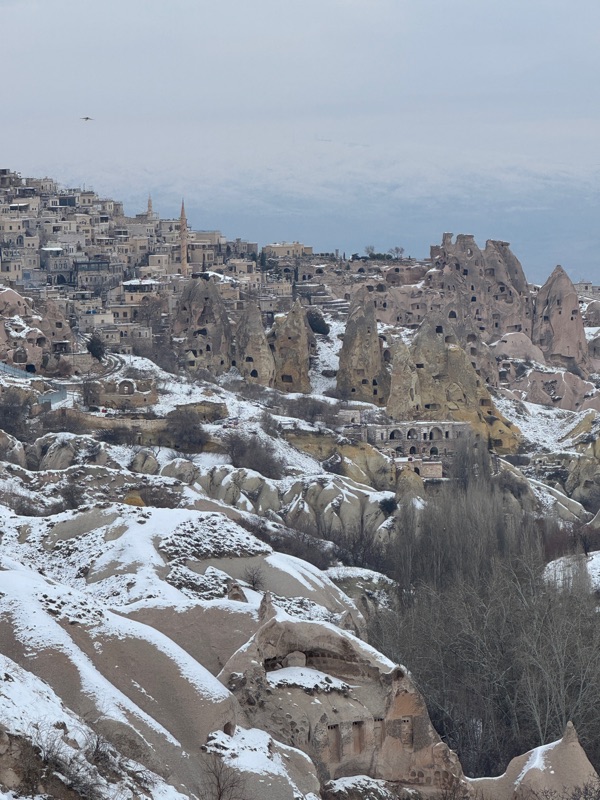
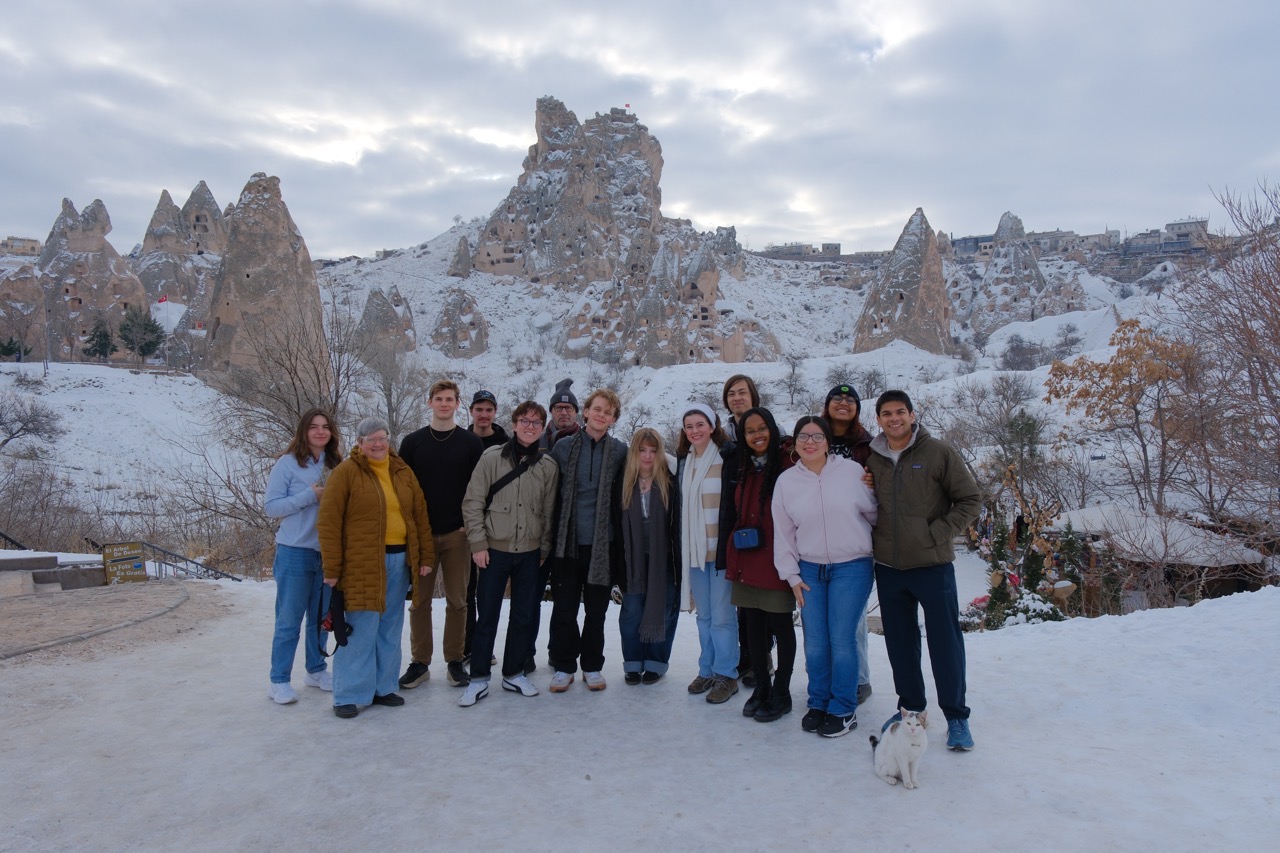
It's our first spectacular view at
Cappadocia, but Andrew saw a cat.

Kalyn must have a giant file of notes.

Ok, these guys have to form a boy-band.


Yep, I'm nervous...

but they're happy.

Sammy is pointing out the carved church, 
but Brennen is pretty sure this is about him.

Priyal got lost in the cave. She has no idea how
close we were to leaving her behind.

Nate digs a carved church.

This was supposed to be the second group, but 
I see some people always know where the 
camera is.

Nate and Neil on a reflective walk near the
Fairy Chimneys. 

Hey gals!

Daniela would prefer to just keep moving.


Last thing I said was "don't go past that rock."
This is them coming back from WAY past that rock.

We emerge from Dolmahbache.

More stairs, and stares.

Every picture you take is a picture of yourself.


Sunday, January 18, 2026

Day 11: Ottoman Strength and Desperation


Written by Nolan Tester

Merhaba ve n’aber!

Traveling from Capadocia is enduring work. Therefore, no blog was written for the 17th. Nonetheless, we are back in Istanbul doing as the Ottomans do. 

Today we travelled to the Dolmabahçe palace and Rumeli Hisarı or Fortress of Europe. 

Tourist entrance into the palace

The Dolmabahçe palace was started in 1843 and finished in 1856 as another home for the Ottoman sultan and his family and harem. The palace is designed after European architectural styles including baroque, rococo, and gothic. The interior features many pieces from across the world including English, French, German, Russian, and Japanese productions. 

Grand chandelier in main meeting room

The opulence and grandeur of the palace knows no bounds as the interior remains one of the most awe striking works I’ve seen during my time in Türkiye. However, under the gilded molding, ornate vases, and magnificent chandeliers, the palace harbors a deep sense of desperation. The palace was built only decades before the collapse of the Ottoman Empire. Thus, during this time, great economic decline and territorial losses backed the ottomans into an unfamiliar position. A result of these circumstances led the empire to be considered “the sick man of Europe,” deemed so by Nicholas II, the Russian tsar. This stung the sultan and empire as a whole because of their continued effort to show the European powers they could hang. Therefore, the sultan, Abdülmedjid I, thought, “what’s more European than a palace built by Europeans?” Following this revelation, he ordered the construction of the Dolmabahçe palace. On top of showing strength, the palace was also a show of continued economic stability; something they were certainly not. 

A lion symbolizing the sultan

A lioness with her cubs representing the prince
Grand staircase to second floor

Overall, through the sheen and glean of the palace, it holds an overwhelming desperation to belong and maintain a semblance of a thriving empire. The palace was built to show the opulence of a failing empire. It was emboldened, inspired, and built by Europeans to show other Europeans how European the ottomans were. 


Moving along, we bussed along the beautiful Bosporus river and ogled at the wealthy homes of the area before reaching the Runeli Hisarı. Nonetheless, we enter the medieval castle and are greeted by the grand stone walls of the inner courtyard. 

Side of the castle’s tower
Spolia on tower

The castle was built across the Bosporus river to have a highly strategic location just across from the target for eventual invasion, Constantinople. The construction of the castle was undertaken by over 7000 soldiers and was hurriedly completed using pieces of stone sourced from many different locations. Spolia, the act of taking an old material from another structure and repurposing it, is exampled perfectly here because of the nature of its composition. The position of this fortress was strategic not only for its shouting distance front Constantinople, but also it allowed for quick maritime movement across the Bosporus; something that played a vital role in the quick and decisive invasion in 1453. This invasion was quick not just because of this particular fortress, but also the collective effort to invade Constantinople across decades by many sultans. 

Courtyard garden

Closing out our time at the fortress we overlooked the beautiful gardens and gleaming Bosporus painting the landscape. However, we soon learned this was the calm before the storm as a fast moving sleet storm swept over us, quickening our pace to the bus to end the day of touring. With that, I end today’s blog. Myself and all look forward to the final remaining days of this course. I hope you have enjoyed our antics as much as us! 

Iyi akşamlar!


Friday, January 16, 2026

Day 10: Monks, Manti, and Underground Cities

By Gia Joslin 

Merhaba everybody!

This morning we left to explore Cappadocia at 9, sleeping in and enjoying a relaxed hotel breakfast before heading out, what a great start to the day! After boarding the bus for the short drive to our first stop, Saba reminded us that the road itself was part of the experience. We passed a troglodyte village carved directly into the land and a watchtower overlooking a settlement that had adapted itself to stone rather than imposing itself upon it. From the very beginning, Cappadocia set itself apart from the other sites we have visited.

This landscape has been a crossroads for centuries, but not in the way Roman urban planners would have liked. Roman ideas of what a city “should” be: grids, highly visible expressions of civic power, and monumental forums, do not quite apply here. (Try comparing it to images of Greco-Roman sites on some of the previous blogs!) Experiencing Cappadocia and all that it has to offer has allowed us to ask: what actually constitutes a city? Is it stone walls and public squares, or is it continuity and connection shaped by a shared need for survival? Here, cities were not always visible, shielding their inhabitants from the outside world, carved, hidden, and one with the earth. Of course civic life existed, just not according to imperial expectations.

Our first stops were the cave homes and pigeon valley, a quick picture break but also an introduction to how deeply integrated daily life was with the landscape itself.
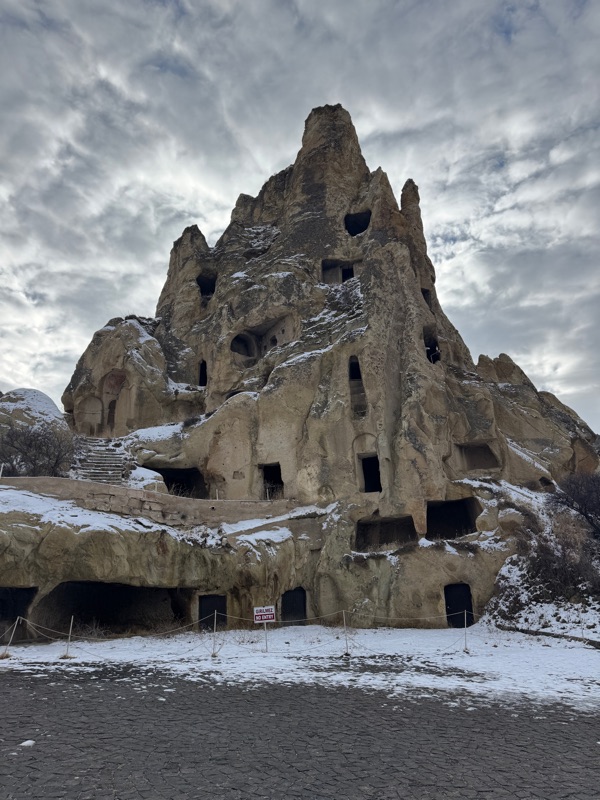
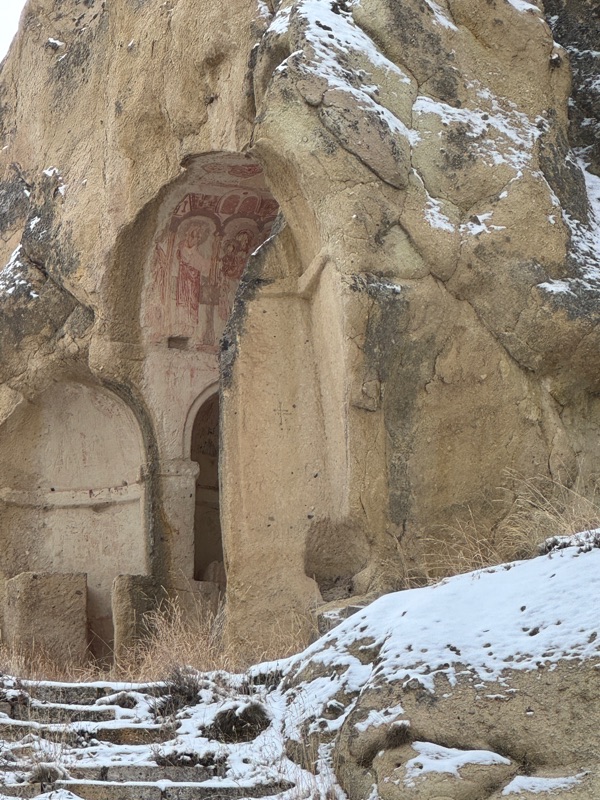
After this, we visited what I believe to be one of the most beautiful sites on this course, a nun’s monastery carved into rock, now fragile and at risk of collapse. Only about one third of the original structure remains, and standing outside, you can see the interior structure of the rooms inside of the cave, something you were never meant to see exposed. There are also faint fresco remains, images we must imagine as once vibrant. These monastic sites were intentionally built away from water sources and heavy traffic due to the fact that for the first three hundred years of Christianity, the faith was suppressed and believers needed refuge, with Cappadocia becoming a place of protection.
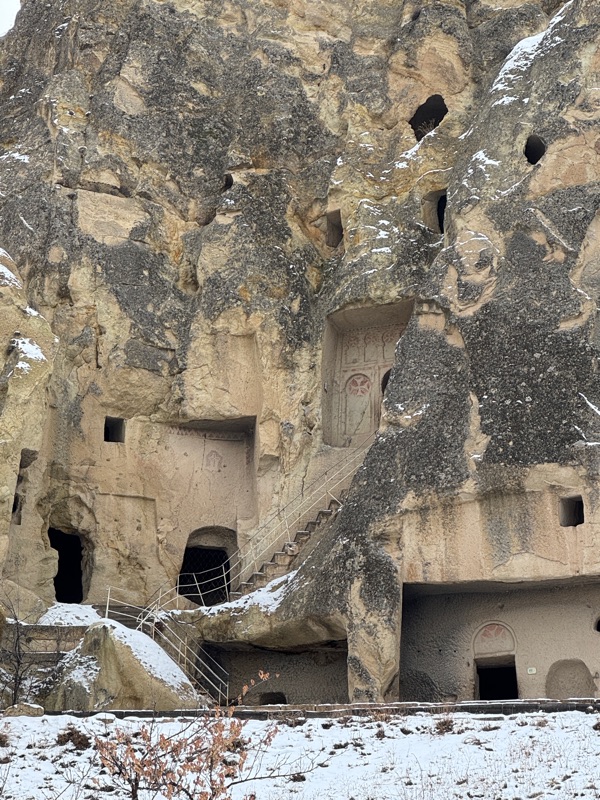
Christianity later became the state religion, but danger returned in the seventh and early eighth centuries; though raiders were not interested in conquering Cappadocia permanently. They came for wealth: enslaved people, resources, anything portable. Eastern Türkiye is mountainous, and to reach the west, invaders had to pass through this region and back again. Cappadocia was vulnerable by geography alone. Groups like the Sassanids passed through these lands, leaving chaos in their wake.

Iconoclasm under the Byzantine Empire changed the religious landscape dramatically. After imperial policy turned against images, there were roughly 115 years when no new religious images were created. Frescoes were whitewashed, plastered over, and destroyed, Cappadocia being deeply impacted by this. Many of the cave churches here date to the sixth century, but most surviving frescoes are post-iconoclasm, from the eleventh or twelfth century. The monastic complexes themselves often predate this, lasting from the sixth century until the arrival of the Turks.

Eventually, Christians began building churches above ground. There was no longer a need to hide. Outdoor churches appeared in the seventeenth and eighteenth centuries. Then, after the establishment of the Turkish Republic, the population exchange between Greeks and Turks reshaped the region again. By 1924, the religious landscape had changed decisively. As late as the 1960s, Muslim Turkish families were still living in these caves. Many frescoes were damaged or destroyed during this time, but even defacing images proves their power. You do not destroy what does not matter. Preservation of the interiors now feels especially urgent.

Inside one church, painted brick walls reflect a longing for freedom. Priests themselves created much of this art, and within it there is a quiet yearning for the churches they knew and loved, spaces far grander than these hidden caves.
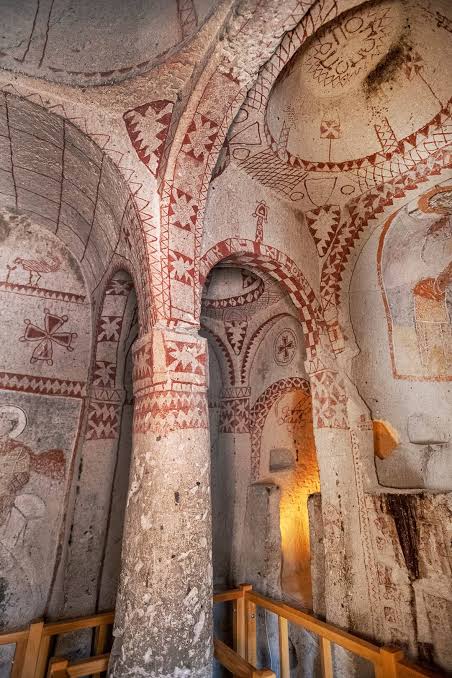

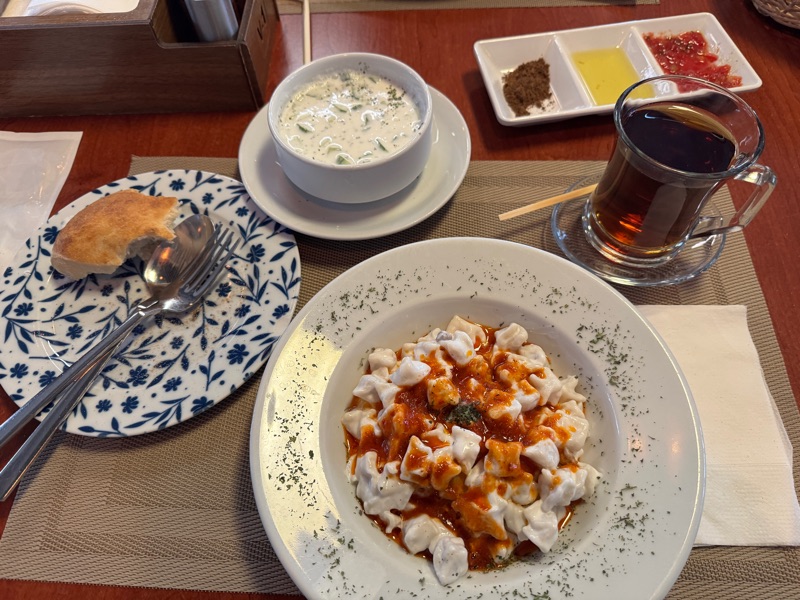
We saw dining rooms with carved tables, kitchens with holes in the ceiling for fires. These spaces were defensive as well as domestic. If attacked, doors could be sealed, trapping smoke inside to deter intruders. After a delicious lunch of mantı (small Turkish dumplings served with yogurt and spices) we descended into one of Cappadocia’s underground cities.

The underground cities of Cappadocia challenge imperial assumptions again. Roman and Byzantine authorities distrusted underground living. It was less governable, harder to tax, and harder to control. Today, only 32 underground cities are open to the public, though over 300 have been found. We visited a medium-sized one, considered among the safest. Roughly 250 people could live there, supported by about 300 villages that maintained and used these spaces. It functioned like a bunker.
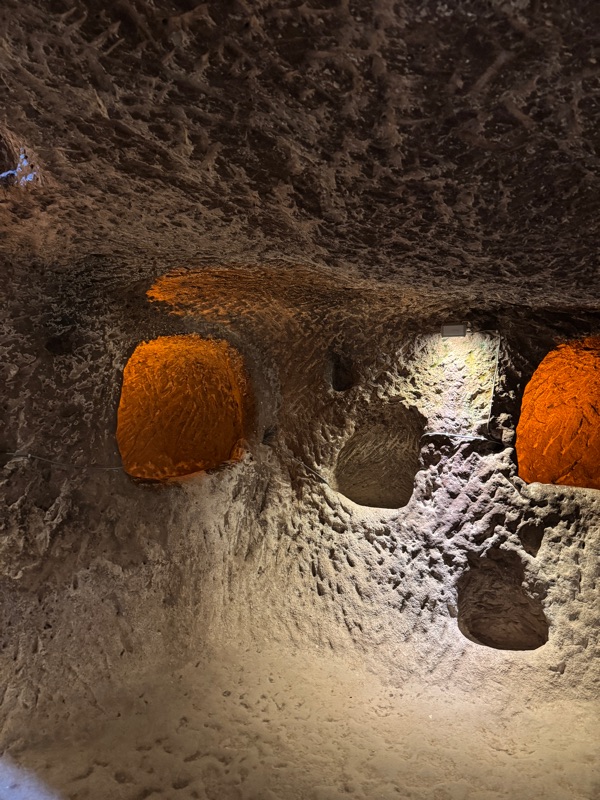

Daily life followed strict rules. No cooking or lighting fires during the day. No light or cooking during a full moon, when visibility outside was high. These cities were not meant for long-term habitation. Three months was usually the maximum, just long enough for an enemy to pass through. There were stables for animals, storage rooms for fresh food, and many spaces whose functions are still unidentified. Rolling stone doors could be sealed during attacks, forcing enemies to break through. Archaeologists believe these cities began simply: someone saw a cave and decided to enlarge it. There is a strong belief that the origins go back to the Hittites, whose territory stretched across the delta of the Red River, the longest river originating in central Türkiye and flowing to the Black Sea.

According to archaeologists, the city has eight floors, though visitors can only see two. The rest have been reinforced with concrete. Further south, another underground city could hold up to four thousand people, yet we only ever see about twenty percent of these structures.
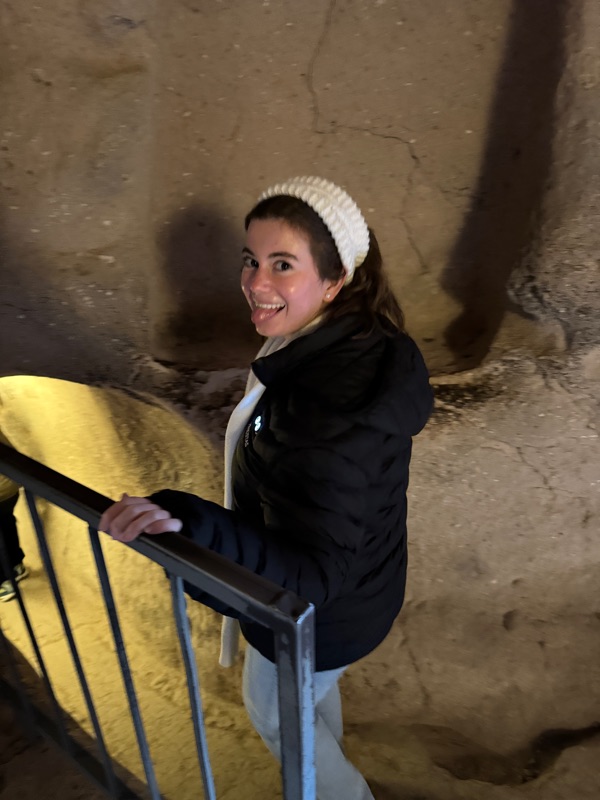

We ended the day in a fairy chimney valley. The formations look impossible, and standing there, it’s easy to understand why people once said fairies must have made these chimneys. The softer rock below eroded faster than the mineral-rich stone above, leaving tall, capped pillars behind. Hermits once lived here, practicing early monasticism. Monasteries were centers of learning, with monastics often serving as scribes, teachers, and record keepers. In many ways, demonstrating that monastic life was intellectually rich, communal, and far from bleak or uneducated, with hermits being placed on a pedestal within these communities.
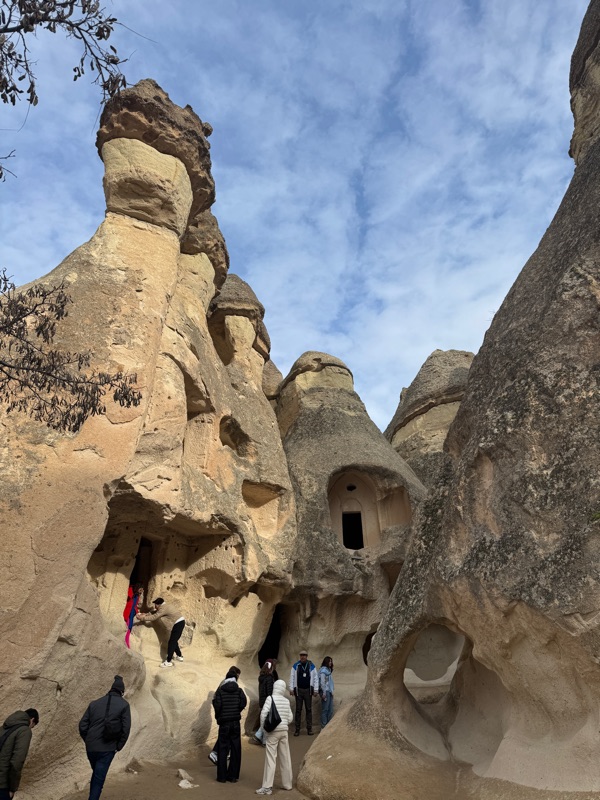

Visiting Cappadocia has challenged us to rethink how humans live, believe, and survive. It also encourages us to question what we assume about the so-called “Dark Ages,” showing us the joy, scholarship, and community which can be found in monastic life. These ancient cities themselves are bright with continuity, ingenuity, and intellectual life, revealing a world far more complex and illuminated than labels may suggest.

Day 12: Cold Day and Warm Memories

  Salam, As we embarked on one of our final days in Türkiye we were greeted on the early morning walk with a beautiful snowy scene. Congen...